Understand likely ancestry
Breed identification can help reveal likely genetic contributions from one or more breeds when appearance alone does not provide a reliable answer.

A dog breed identification report can help owners, adopters, and rescue organizations better understand likely breed ancestry when a dog's background is unknown or incomplete. DNAOM focuses on reporting that presents breed-related findings clearly, with useful context around what the results can—and cannot—tell you.

Mixed-breed dogs and rescue dogs often arrive with limited or uncertain background information. Breed identification testing can provide additional ancestry context, while a well-structured report makes those findings easier to review and discuss.
Breed identification can help reveal likely genetic contributions from one or more breeds when appearance alone does not provide a reliable answer.
Results are easier to use when ancestry findings are organized clearly rather than presented as disconnected technical data.
Breed information may give owners additional background for conversations about behavior, activity, training, grooming, and general care, while recognizing that individual dogs can vary widely.
Breed identification is based on comparing a dog's genetic markers with reference data used by the relevant testing methodology. The resulting report may identify likely breed contributions or ancestry patterns depending on the test.
These findings provide genetic context, but they should not be treated as a complete prediction of personality, behavior, health, or appearance.
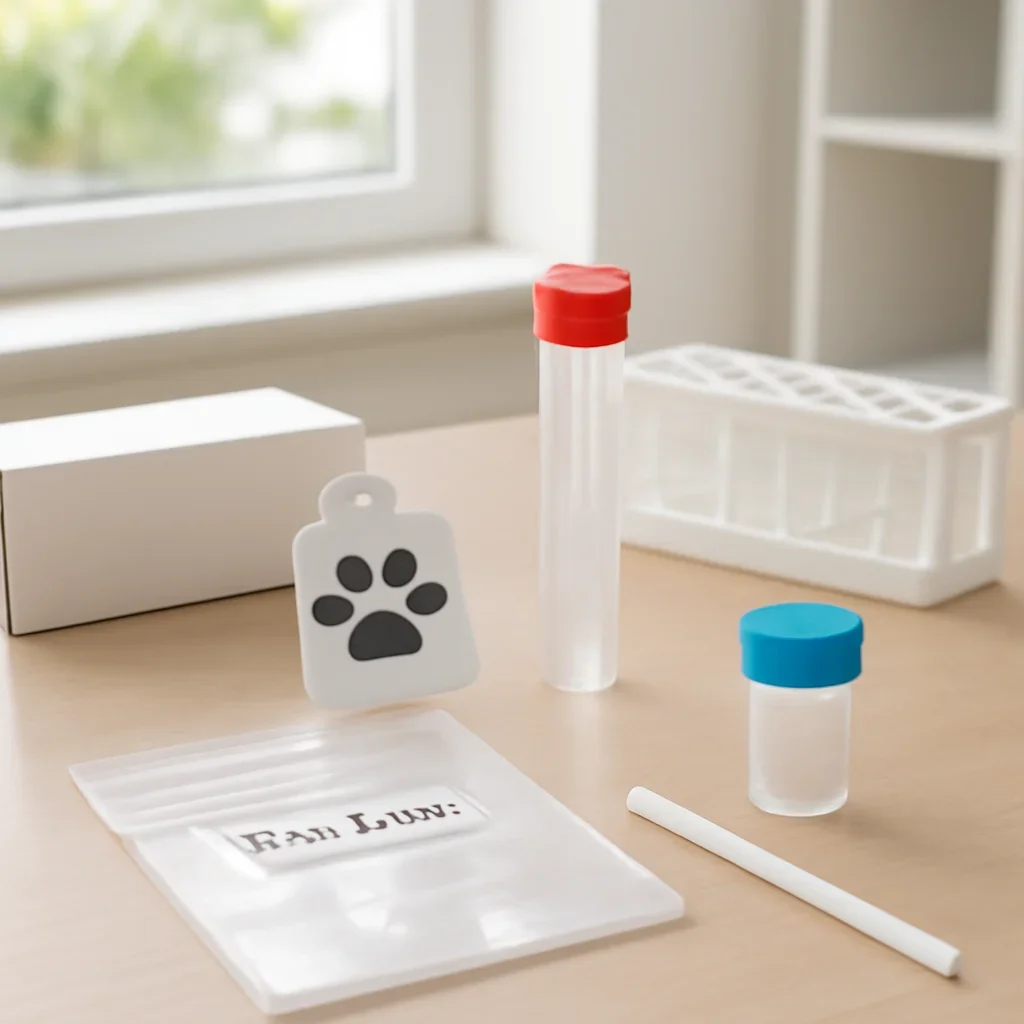
Exact report content depends on the testing service, but breed-related results are most helpful when key findings are organized clearly and explained in context.
The report may identify breeds or breed groups that appear to contribute to the dog's genetic ancestry.
Depending on the test, findings may include estimated proportions or another representation of breed contribution.
Supporting information may help owners learn more about breeds identified in the report without assuming every breed tendency applies to their individual dog.
If inherited health is the primary concern, a dedicated dog disease test may be more relevant than breed identification alone.
Breed DNA reporting is especially relevant when reliable pedigree information is unavailable and a dog's ancestry is based mainly on appearance or assumptions.
Owners who are curious about a dog's background can use breed identification to obtain genetic ancestry context that may not be visible from physical appearance.
People adopting a dog with little documented history may use DNA testing to learn more about likely breed ancestry after bringing the dog home.
Rescues may use breed reporting as an additional source of information when records are incomplete, especially when they want to provide adopters with better-documented background context.
Breed reporting can be informative, but it is most useful when the results are interpreted within the scope of the actual test.
Understanding likely ancestry, adding context when pedigree records are unavailable, and giving owners a clearer starting point for learning about breeds represented in their dog's genetic background.
A complete prediction of temperament, adult size, behavior, inherited disease status, or future health. Those questions may require different information, professional assessment, or dedicated genetic testing.
Dog DNA testing can serve several different purposes. Before ordering, make sure breed ancestry is actually the information you want to learn.
These guides can help you understand how dog DNA testing works, how to compare available options, and what to expect from the process.
If breed ancestry is your main goal, explore DNAOM's dog breed DNA testing options. If you are still deciding between breed, inherited disease, or another canine DNA test, use our guides or contact DNAOM for help finding the relevant page.
