Start with the question
Define exactly what you want to learn before looking at test features. Breed ancestry, inherited disease, and selected health genetics require different types of analysis.

Choosing a DNA test becomes much easier when you start with purpose instead of price, report size, or broad marketing claims. A genetic health test, dog breed test, inherited disease screen, and targeted cat test may all use DNA, but they are designed to answer very different questions. This guide helps you narrow the right testing category before you order.

These three steps eliminate many of the common reasons people end up comparing tests that were never designed to serve the same purpose.
Define exactly what you want to learn before looking at test features. Breed ancestry, inherited disease, and selected health genetics require different types of analysis.
Review which genes, variants, genetic markers, breed references, or hereditary conditions are included rather than relying on a broad product name.
Sample method, laboratory turnaround, report focus, accuracy context, and available support all matter once you have narrowed the correct testing category.
Begin by writing down the outcome you want from testing. This is the most important decision because every other comparison depends on it.
Begin with “Which test answers my question?”
A targeted test can be more useful than a broader test when you already know exactly what genetic information you want to investigate.
Comparing in this sequence keeps your decision focused on usefulness rather than superficial differences.
Decide exactly what you want the DNA analysis to help you understand.
Confirm which markers, variants, conditions, or reference data are included.
Understand how the sample is collected and whether the process fits your situation.
Review expected laboratory processing after successful sample receipt.
Know what the report will tell you and where its interpretation stops.
DNAOM separates human health, dog, and cat DNA testing so unrelated tests do not have to compete for your attention.
Start here when your question relates to one of DNAOM's supported human genetic health tests, including methylation, lactose intolerance, or celiac-related genetics.
Explore genetic health testingStart here when you need breed identification, inherited canine disease testing, or another supported dog DNA pathway.
Explore dog DNA testsStart here when you need broader feline inherited disease screening or targeted genetic testing such as PKD.
Explore cat DNA testsSimilar sample collection can make different products look interchangeable when the actual laboratory analysis is very different.
A dog breed DNA test focuses on ancestry and breed identification. A dog disease test focuses on supported inherited genetic conditions. Choose according to which question matters to you.
A cat disease test can support broader inherited disease screening, while a PKD cat test is intended for a more focused PKD1-related question.
Human genetic health tests and pet genetic tests should not be compared on one universal scale. The species, test methodology, and intended genetic result are fundamentally different.
More information is not automatically better. A targeted test may be more useful when it directly addresses the genetic question you need answered.
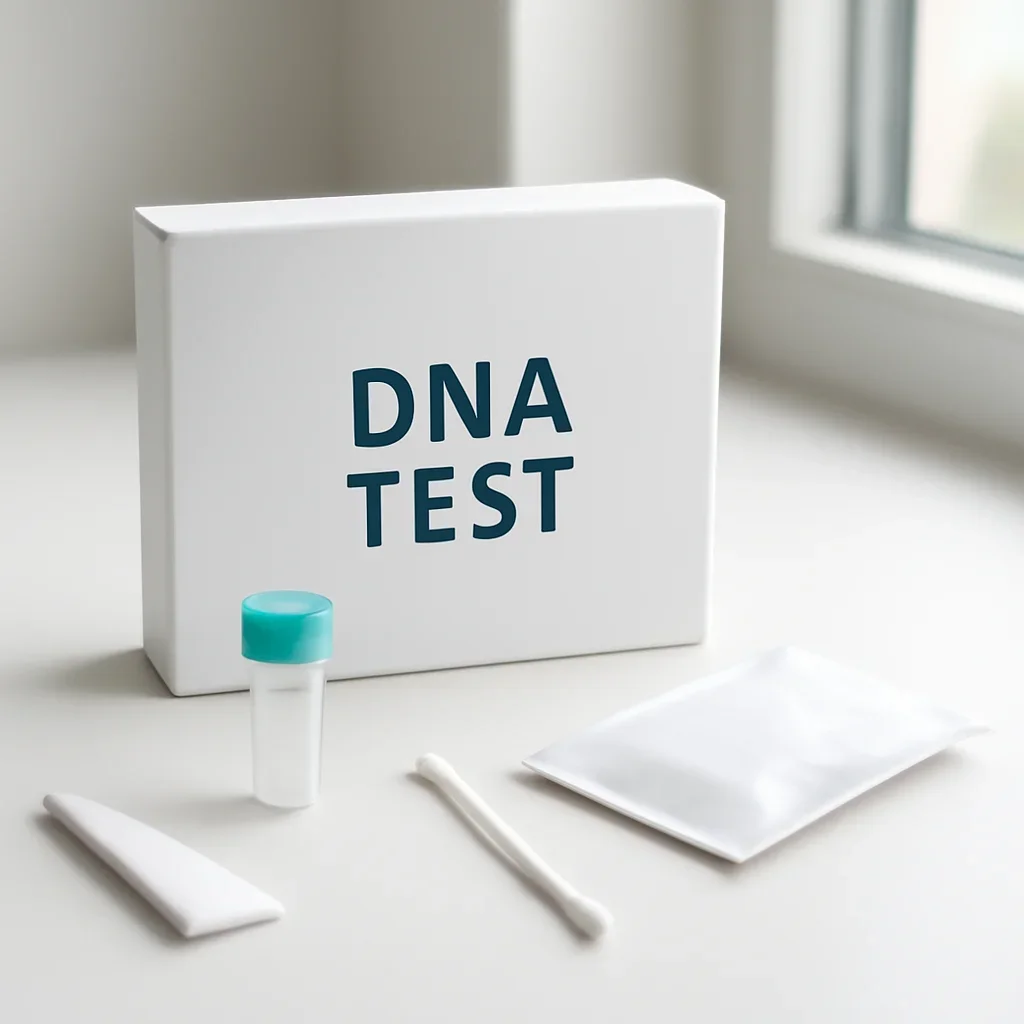
Once you know the test category, review the collection process. Many approved DNAOM tests use straightforward, non-invasive collection, but instructions can still vary between products.
Use this framework after you have narrowed your testing category.
| Factor | Question to ask | Why it matters |
|---|---|---|
| Testing purpose | What question is this test designed to answer? | The correct purpose matters more than the size of the report. |
| Testing scope | Which genes, variants, markers, breeds, or conditions are included? | A product name alone may not explain exactly what is analyzed. |
| Sample collection | What sample is needed and can I collect it correctly? | Proper collection supports successful laboratory processing. |
| Turnaround | When does processing begin and how long does it usually take? | Laboratory timing generally begins after sample receipt. |
| Report type | What information will the final result actually show? | The report needs to match the original reason you ordered. |
| Accuracy context | How should accuracy be understood for this specific test? | Different DNA analyses cannot always be judged using one universal accuracy claim. |
Accuracy and turnaround matter, but they need context. A fast test that does not answer your question is not the right choice, and a broad accuracy claim does not necessarily describe every type of genetic analysis.
Turnaround is useful only after you have confirmed that the test evaluates the genetic information you actually need.
Start with relevance, then compare convenience.
Define your testing goal, choose the correct category, review what is analyzed, understand collection, compare report scope, and then evaluate turnaround and other practical differences.
The largest report, the broadest product name, the shortest advertised turnaround, or the assumption that every DNA test answers the same type of question.
Once you know what kind of DNA testing you need, a category-specific guide can help narrow the options further.
Compare the main approved health and pet DNA testing pathways without treating unrelated categories as interchangeable.
Compare DNA testsCompare dog breed identification, inherited disease testing, and other supported canine DNA options.
Compare dog DNA testsCompare approved dog and cat testing pathways based on ancestry, inherited health, and targeted genetic questions.
Compare pet DNA testsStart with testing purpose. The test should be designed to answer the question you actually have. After that, compare scope, collection, turnaround, report type, and accuracy context.
No. A larger panel or longer report is not automatically more useful. A targeted test may be more appropriate when you have a specific genetic question.
Turnaround is one practical factor, but first confirm that the test is designed to answer your question. Speed does not make an irrelevant test useful.
No. Breed testing focuses on ancestry or breed identification, while disease testing examines supported inherited genetic conditions included in the selected test or panel.
It matters because the sample needs to be collected and handled correctly for successful processing. Always follow the exact instructions provided with the selected DNA test.
Accuracy should be discussed within the context of the specific test, including its purpose, methodology, genetic markers or variants, reference data where applicable, and sample quality.
The right DNA test is the one whose analysis and report match the question you need answered. Collection method, turnaround, and other features should be compared after that fit is established.
Browse DNAOM's approved genetic health, dog, and cat DNA testing options. If you already know your category, go directly to the relevant test page instead of comparing unrelated products.