The test type
A test must be designed for the question you want answered. Methylation testing, breed identification, disease screening, and genetic profiling analyze different information.

DNA tests can provide reliable genetic information within the scope of the specific analysis being performed. But “accuracy” does not mean every DNA test can answer every health, ancestry, or pet-related question. Test type, sample quality, laboratory processing, reference data, and interpretation all affect how useful a result is.

A laboratory can accurately analyze the markers included in a test while the test itself still has a defined purpose and clear limitations.
There are two separate questions. First: did the laboratory accurately analyze the genetic information included in the test? Second: does that information actually answer the question you are trying to investigate?
A result can be technically precise and still be misinterpreted if the test was not designed for the conclusion someone is trying to draw. That is why DNAOM emphasizes test selection, sample quality, and report scope rather than making broad accuracy claims.
Evaluating DNA test accuracy requires more than looking at a single percentage. The usefulness of a result depends on the complete testing process from test selection through interpretation.
A test must be designed for the question you want answered. Methylation testing, breed identification, disease screening, and genetic profiling analyze different information.
Collection instructions matter because the laboratory needs a usable sample. Incorrect or inadequate collection can interfere with successful processing.
The selected markers or genetic information must be processed according to the laboratory workflow associated with the ordered test.
Results are most reliable when they are interpreted within the purpose and limitations of the report rather than extended to claims the analysis was not designed to make.
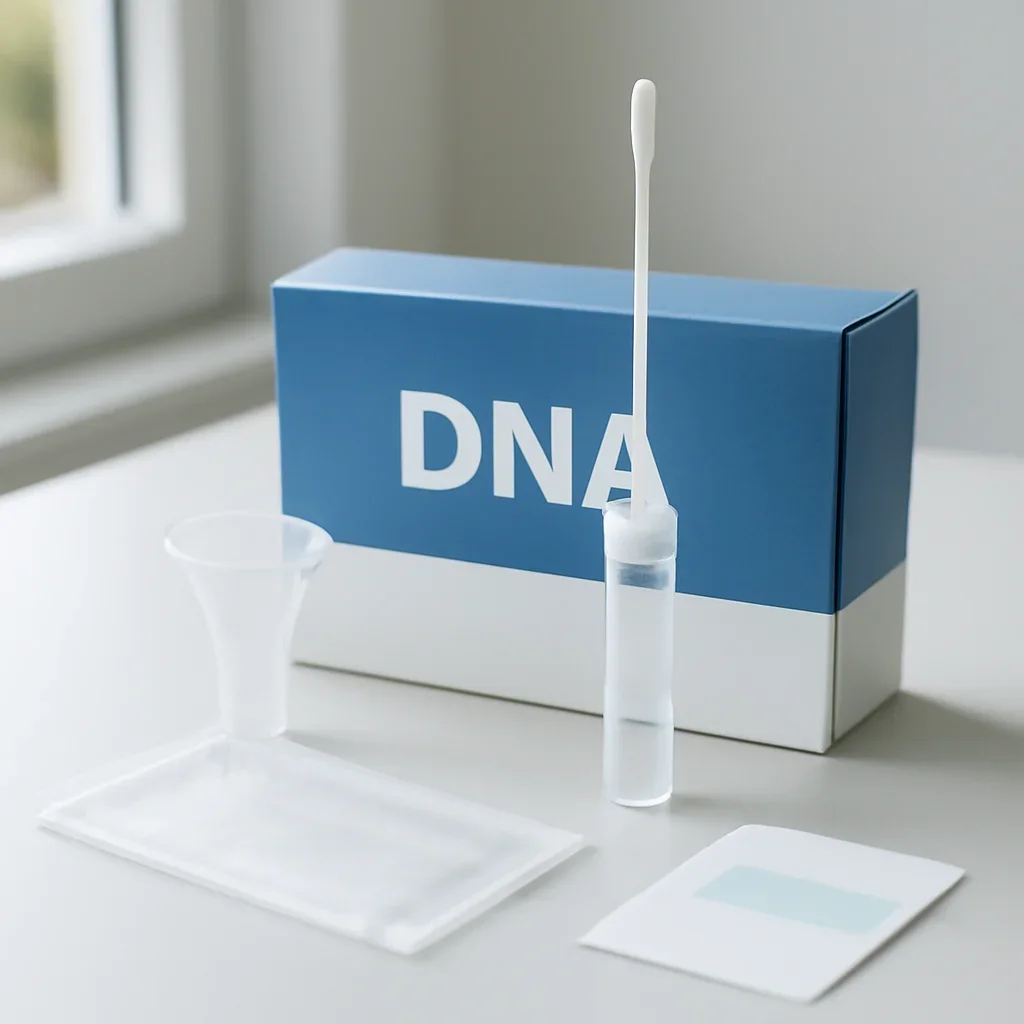
At-home collection is designed to be practical, but convenience does not make instructions optional. Each kit has a specific collection workflow, and the quality of the submitted sample can affect whether testing can proceed successfully.
Understanding this distinction is one of the most important parts of evaluating DNA testing. A technically reliable analysis can still be misunderstood if the result is taken outside the scope of the test.
This relates to the laboratory process used for the specific markers, variants, or genetic information included in the ordered test.
A breed test, health predisposition test, methylation analysis, and genetic profile all have different reporting purposes.
A result should support only the conclusions justified by the markers, methodology, and reporting purpose of the selected test.
Different tests are evaluated against different questions. A useful accuracy discussion begins with the type of DNA test being used.
Health-focused tests report selected genetic variants, predispositions, or pathway-related information. They should not be interpreted as automatic clinical diagnoses.
Explore genetic health testingBreed identification depends on comparison with available breed reference data, while canine disease testing examines selected inherited variants.
Explore dog DNA testingCat DNA testing may screen for selected inherited conditions, blood-group information, traits, or specific variants such as those associated with PKD.
Explore cat DNA testingThe report should be read according to what was tested and what the finding represents. Genetic information often provides context rather than a complete answer on its own.
Instead of asking only whether DNA testing is accurate in general, ask whether a specific test is appropriate for the exact information you want.
Be specific about whether you want health context, breed information, inherited disease screening, or another genetic result.
Check whether the markers, genetic locations, traits, or reference data included in the analysis match your goal.
Know whether the result provides predisposition, identification, ancestry, pathway context, or another form of genetic information.
A trustworthy test page should explain what the analysis is not designed to determine as clearly as what it can report.
These DNAOM guides explain the testing process, test selection, turnaround, cost, and result interpretation in more detail.
Follow the process from choosing a test and collecting a sample to laboratory analysis and report delivery.
Test selection How to choose the right DNA testCompare DNA testing options by purpose, sample requirements, report scope, and limitations.
Turnaround How long do DNA test results take?Learn how test type, sample return, laboratory receipt, and processing affect result timing.
Interpretation How to read DNA resultsUnderstand how to interpret genetic findings within the scope of the analysis you ordered.
Pricing How much does a DNA test cost?Review why DNA test pricing can vary depending on testing purpose, laboratory analysis, and reporting scope.
Laboratory standards Lab-certified accuracyLearn more about DNAOM's approach to laboratory processing, appropriate test use, and realistic accuracy expectations.
Accuracy matters, but so does choosing the correct analysis. Compare DNAOM's approved testing options, understand what each report is designed to provide, and follow the collection instructions carefully.
Accuracy depends on the specific analysis, sample quality, laboratory processing, and whether the result is interpreted within the intended scope of the test. Different DNA tests answer different genetic questions.
Learn how DNA testing worksAt-home collection can provide a usable sample when the test's instructions are followed correctly. The required collection method depends on the specific DNA test.
Learn about at-home DNA test kitsNot necessarily. Some health DNA tests report genetic predisposition or inherited variants rather than a clinical diagnosis. Health concerns should be evaluated with an appropriate healthcare professional.
Learn about health insight reports