Are Dog DNA Tests Worth It? Pros, Limits & Value | DNAom
Dog DNA Buying Guide • U.S.

Are Dog DNA Tests Worth It? It depends on what you want to learn.

For many dog owners, yes—but the value comes from matching the right test to a real question. Breed ancestry, inherited health screening, and DNA identity testing serve different purposes, and no single report can tell you everything about your dog.

Before you spend money on a kit, decide what information would actually change what you know, discuss with your veterinarian, or do next.

  • Worth considering when you have a specific ancestry, health, or identity question
  • Less useful when you expect certainty about every disease, behavior, or breed characteristic
  • The best-value test is the one whose report matches the decision you need to make
Dog owner considering whether an at-home dog DNA test is worth buying
Think “useful answer,” not “more data.” A smaller, relevant test can be more valuable than a long report that does not answer your question.
The short answer

So, are dog DNA tests actually worth the money?

They can be. A dog DNA test is most likely to feel worthwhile when you want information the test can reasonably provide—such as an estimate of breed ancestry, selected inherited genetic findings, traits, or an appropriate DNA profile for identity or parentage.

It is less likely to be worth it when you expect a home test to diagnose every health condition, certify that a dog is purebred, predict personality with certainty, or replace veterinary care.

A realistic verdict

When a dog DNA test is—and isn't—good value

Instead of asking whether every dog DNA test is worth buying, ask whether a particular test is useful for your dog and your reason for testing.

Often worth it

You have a specific question

Testing can provide useful new information when the report is designed around something you genuinely want to understand.

  • Unknown or mixed breed ancestry
  • Selected inherited health variants
  • Parentage or DNA identity
  • Breed-relevant genetic screening
Depends on your goal

You mainly want interesting insights

Curiosity is a perfectly valid reason to test, but the value is personal. Decide whether ancestry estimates, traits, and other informational results justify the price for you.

  • Learning more about a rescue dog's background
  • Exploring inherited traits
  • Getting additional context about your pet
  • Creating a report to keep with your dog's records
Probably not worth it

You expect the test to do too much

DNA testing becomes poor value when you are buying certainty the test was never designed to provide.

  • Diagnosing unexplained symptoms by itself
  • Guaranteeing whether disease will develop
  • Proving official breed or registry status
  • Predicting personality or behavior with certainty
Where the value comes from

Four situations where dog DNA testing can be genuinely useful

The best reason to test is not simply that DNA testing is available. It is that the result can answer a question you could not answer as well from appearance or guesswork alone.

1. Your dog's ancestry is genuinely unknown

A dog breed DNA test can provide ancestry estimates for mixed-breed, rescue, or unknown-background dogs. This can be more informative than trying to identify a dog's heritage from appearance alone.

2. You want appropriate inherited-health information

A dog disease test may identify selected genetic variants associated with inherited conditions. The value is highest when the variant is relevant and you understand what a positive, carrier, or clear result actually means.

3. Parentage or identity matters

A dedicated dog DNA profile can be useful when the actual question involves genetic identity or biological parentage. That is a different purpose from breed ancestry testing.

4. You need genetic context for breeding decisions

Appropriate breed-specific health testing can help breeders identify inherited variants relevant to planned pairings. It should be considered alongside the health-testing guidance appropriate for the breed, rather than treated as a universal replacement for all screening.

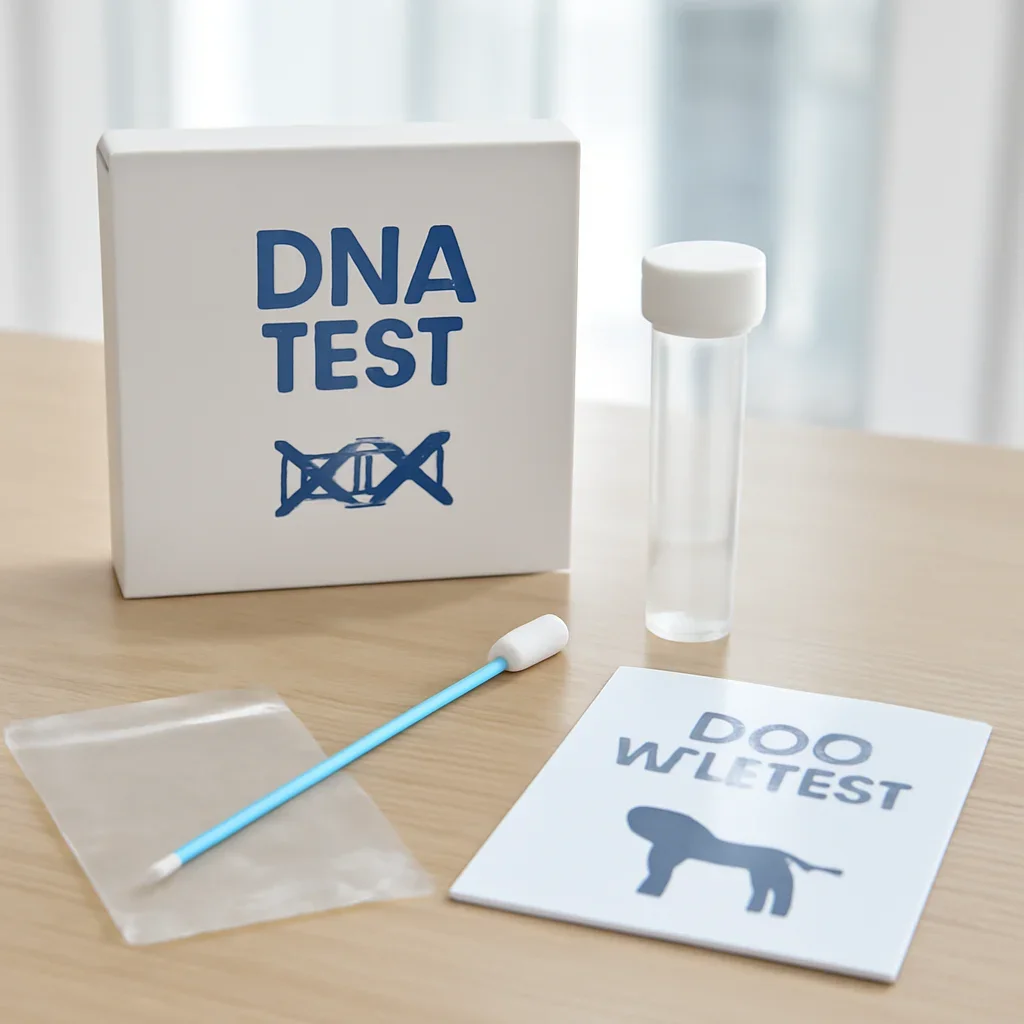
At-home dog DNA cheek swab kit prepared for sample collection
What you're buying

The kit is only the first part of the value

The physical swab is inexpensive-looking by design. What you are primarily paying for is the laboratory analysis, the genetic reference data or variant testing used, and the interpretation presented in your report.

  • A collection method designed to obtain a usable DNA sample
  • Laboratory processing appropriate to the analysis you ordered
  • Comparison with relevant genetic markers, variants, or reference data
  • A report that explains the findings in a usable format
  • Access to results according to the provider's delivery and privacy process

New to the process? Read how dog DNA tests work before comparing kits.

Set the right expectations

What is reasonable to expect from a dog DNA test?

Satisfaction with testing often depends on the gap between what the test is designed to do and what the owner expects it to do.

Reasonable expectations

  • An ancestry estimate when you choose a breed-identification test
  • Results for the genetic variants actually included in a health test
  • Possible carrier or risk-related information for selected inherited conditions
  • Additional information that can guide questions for your veterinarian
  • DNA identity or parentage information when the appropriate test and comparison samples are used

Expectations that go too far

  • A guarantee that a dog will or will not develop every disease
  • A substitute for physical examinations, imaging, bloodwork, or other veterinary diagnostics
  • Official proof that a dog is purebred based only on a breed ancestry result
  • A complete explanation of personality, temperament, or learned behavior
  • Identical breed percentages from every testing provider

Health-information note: A genetic finding can be medically relevant without being a diagnosis. If a result identifies a potentially important inherited health variant, discuss it with your veterinarian before changing medication, diet, screening, breeding plans, or medical care.

Don't buy the wrong type

Breed DNA testing and health DNA testing deliver different value

One of the easiest ways to waste money is to buy a test whose primary purpose does not match your question.

Compare
Breed DNA test
Health DNA test
Main question

What breeds may have contributed to my dog's ancestry?

Does my dog carry selected inherited genetic variants?

Typical output

Breed or population ancestry estimates.

Variant-level results with interpretations such as clear, carrier, or increased genetic risk where applicable.

Especially useful for

Mixed-breed, rescue, or unknown-background dogs where ancestry information is limited.

Dogs or breeding programs where specific inherited conditions are relevant.

Important limitation

Breed ancestry is an estimate and is not the same as official pedigree or registration status.

Finding a genetic variant does not automatically mean the dog currently has or will develop the associated disease.

Before spending money

Use this 5-question check before buying a dog DNA kit

If you can answer these questions before checkout, you are much more likely to choose a test that feels useful after the results arrive.

1

What exact question am I trying to answer?

Breed ancestry, hereditary health, parentage, identity, or simple curiosity require different expectations.

2

Does this particular test answer that question?

Check the actual report scope rather than assuming every dog DNA kit includes breed, health, and identity testing.

3

Do I understand the test's limitations?

Review what the result can establish, what remains uncertain, and whether follow-up with a veterinarian may be appropriate.

4

What is the complete cost?

Consider the included analysis, shipping, optional upgrades, and whether additional testing could be needed later. See dog DNA test cost.

5

How long am I willing to wait?

For U.S. mail-in kits, kit delivery, return shipping, sample receipt, and laboratory processing can be separate parts of the timeline. Read how long DNA test results take.

Make the test worth it

Choose the test around the answer you actually need.

Start with your goal, then compare the analysis, collection method, report scope, limitations, turnaround, and price. That is more useful than choosing a kit because it promises the longest list of results.

Common questions

Dog DNA test value FAQs

Practical answers to common questions people ask before deciding whether a kit is worth buying.

Want to understand the laboratory process first? Read how dog DNA tests work.

Are dog DNA tests worth it?

They can be worth it when you have a specific question that the selected test is designed to answer, such as breed ancestry, selected inherited health variants, identity, or parentage. Their value is lower when you expect a DNA kit to diagnose every health problem, prove breed purity, or predict behavior with certainty.

Are dog DNA tests worth it for mixed-breed dogs?

They can be particularly interesting for mixed-breed and rescue dogs when little is known about ancestry. A breed-identification result is an ancestry estimate based on the reference populations and method used by that provider, rather than an official pedigree certification.

Are dog DNA health tests worth it?

Health testing can be useful when the panel includes variants relevant to your dog and the findings can inform an appropriate veterinary conversation. A variant associated with disease is not automatically a diagnosis, and some diseases involve genetic and non-genetic factors.

Can a dog DNA test prove that my dog is purebred?

Breed ancestry tests are intended to estimate genetic ancestry. They should not be treated as official proof of purebred status or registration. Registries and breed organizations use documented ancestry and their own eligibility requirements.

Can dog DNA tests predict behavior?

Genetics can contribute to inherited traits, but behavior is also influenced by development, learning, socialization, environment, health, and the individual dog. A breed or DNA result should not be treated as a guaranteed prediction of personality or behavior.

Is a more expensive dog DNA test automatically better?

Not necessarily. Value depends on whether the analysis and report answer the question you care about. A focused test may be more useful than a broader panel containing information that is not relevant to your dog.

What should I compare before buying?

Compare the purpose of the test, what breeds or variants are covered, the required sample, interpretation provided, expected turnaround, privacy practices, and the complete cost. See how to choose the right DNA test for a broader buying framework.

How accurate are dog DNA tests?

Accuracy cannot be reduced to one percentage that applies to every type of dog DNA test. Breed ancestry estimation, identification, parentage, and testing for specific genetic variants are different analyses. Read are DNA tests accurate? for more context.

Evidence and veterinary context

This educational guide distinguishes ancestry testing, inherited health screening, and DNA identity because these analyses answer different questions. Health-related genetic findings should be interpreted in context rather than used as stand-alone veterinary diagnoses.