Choose the health question
Start with your dog's breed, family history, breeding plans or specific hereditary-health question.

Dog genetic disease testing looks for specific inherited DNA variants associated with selected canine health conditions. Depending on the condition and inheritance pattern, a result may indicate that a dog is clear of the tested variant, carries it, or has a genotype associated with increased genetic risk.
The important distinction is that genetic screening is not the same as diagnosing disease. A result becomes useful when you understand exactly which variant was tested, why it is relevant to your dog, and what action—if any—should follow.
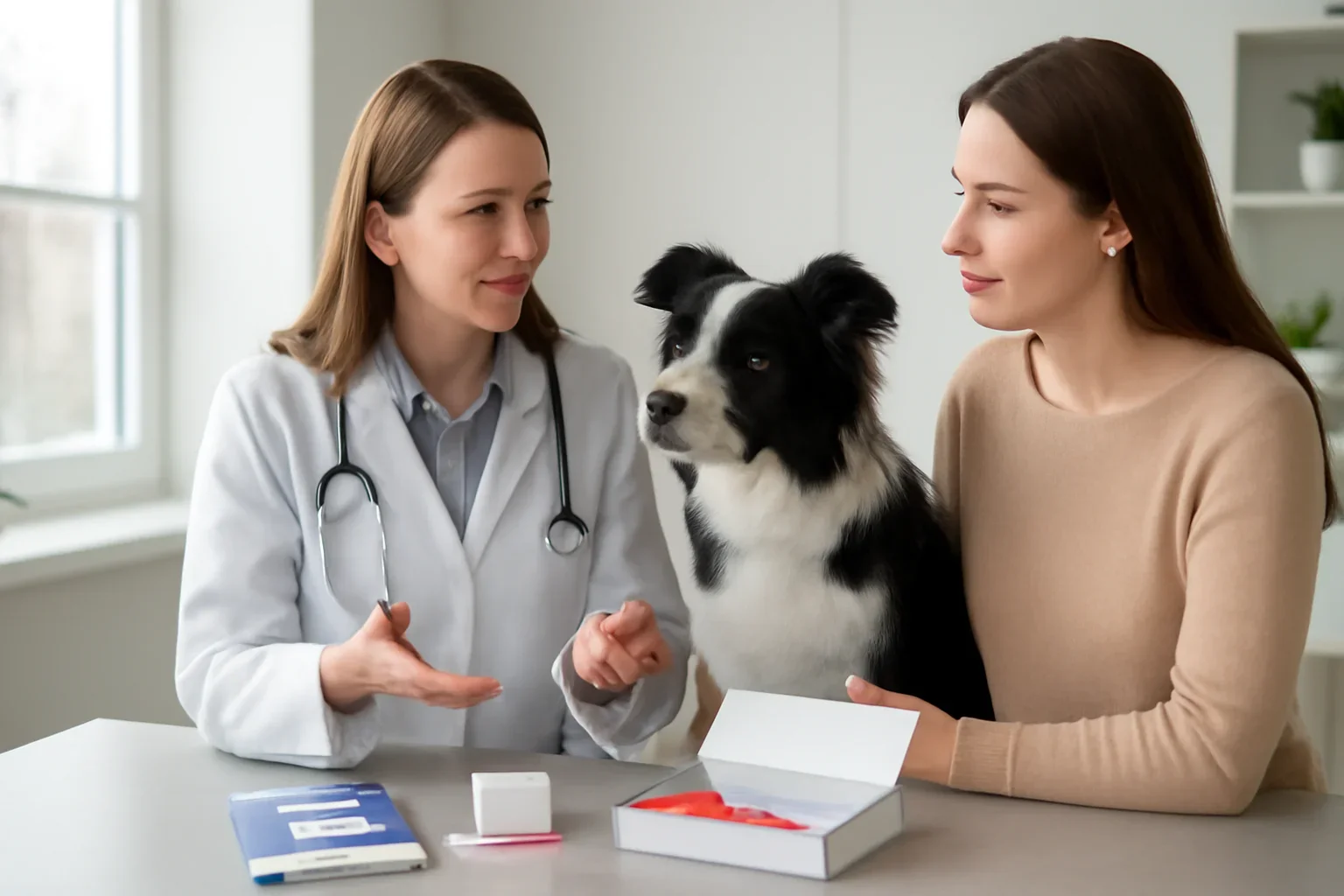
A laboratory analyzes your dog's DNA for specific genetic variants that research has associated with inherited diseases or health-related traits. Depending on the test, the laboratory may examine one targeted variant or many variants in a larger health panel.
The result tells you whether the tested DNA variant was found and, where appropriate, how many copies were detected. The health meaning then depends on the condition's inheritance pattern, penetrance, breed relevance and other clinical factors.
The collection can be simple, but useful interpretation starts before the sample is ever sent to the laboratory.
Start with your dog's breed, family history, breeding plans or specific hereditary-health question.
Many consumer tests use cheek cells. Other laboratory workflows can use blood or another accepted sample type.
The laboratory examines the DNA changes included in the test or panel you selected.
The report identifies whether relevant copies of the tested variant were detected.
Breed relevance, inheritance and the dog's actual health determine what the finding should mean in practice.
Laboratories may use different terminology. These simplified definitions are a starting point—not a replacement for the exact interpretation supplied for the condition being tested.
This usually means the laboratory did not detect the specific disease-associated variant included in that test. It does not necessarily mean the dog can never develop the disease from another genetic or non-genetic cause.
For many recessive conditions, a carrier has one copy of the disease-associated variant. The dog may not develop the classic recessive disease but can potentially pass that variant to offspring. Exact interpretation depends on the condition.
A result can indicate that the dog has the genotype associated with a hereditary condition. Whether disease develops, when it develops and how severe it becomes can depend on penetrance, modifiers and the particular condition.
Always read the condition-specific explanation. Dominant, recessive, X-linked and incompletely penetrant conditions do not follow one universal interpretation. A label that is useful for one disease can be misleading when applied to another.
Understanding how a genetic variant is inherited is essential before using the result for health or breeding decisions.
For a classic recessive condition, two disease-associated copies are generally required for the affected genotype, while a dog with one copy is typically described as a carrier.
For a dominant condition, one disease-associated copy can be enough to alter risk. There may not be a conventional symptom-free “carrier” category.
Some disease-associated genotypes do not cause disease in every dog that carries them. Other genes, environment, age and additional biological factors can affect expression.
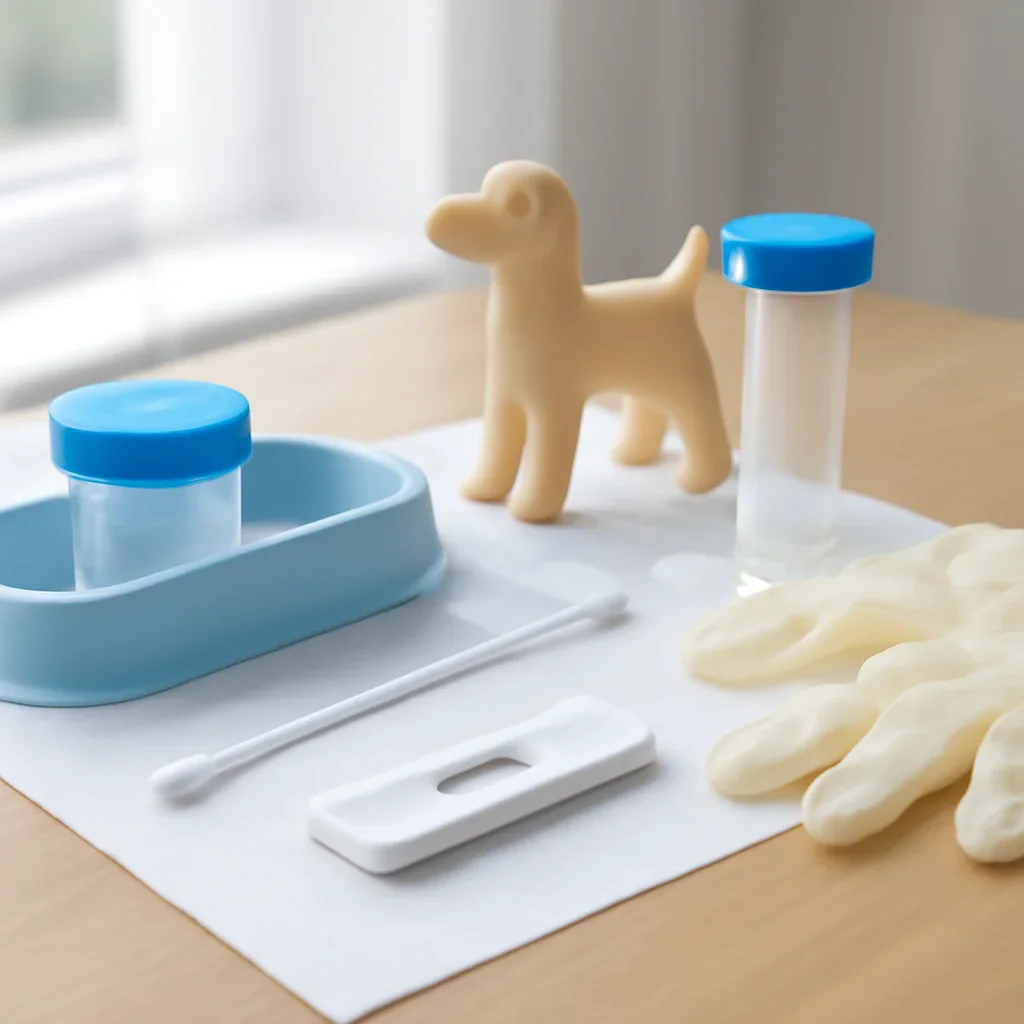
Collecting enough usable DNA matters, but the bigger decision is choosing a test that includes the disease-associated variant relevant to your dog's breed or health question.
Learn more about non-invasive sample collection and how dog DNA tests work.
A panel containing hundreds of variants can sound comprehensive, but most individual dogs do not need every available disease test. Relevance matters more than the headline test count.
Some inherited variants occur primarily in certain breeds or breed families. Check whether the condition is established as relevant to your dog.
Two breeds can develop a condition with the same general name through different disease-associated variants. The correct test must target the relevant variant.
Some breed health programs also recommend orthopedic, ophthalmic, cardiac or other phenotype-based screening that a DNA panel cannot replace.
Breeders may know about hereditary problems within a particular line that justify additional targeted testing beyond broad breed recommendations.
The value of the report comes from understanding its scope rather than treating it as a complete forecast of your dog's health.
Veterinary context matters: if a DNA report identifies a medically important finding, discuss it with your veterinarian before changing medication, treatment, exercise, diet, surveillance or other aspects of your dog's care.
A DNA result can add useful information without replacing the clinical tools veterinarians use to determine whether a dog is actually affected by disease.
| Compare | Genetic disease testing | Veterinary diagnostic testing |
|---|---|---|
| Primary question | Does the dog carry a specific inherited genetic variant? | Does the dog currently have a particular disease or clinical abnormality? |
| Typical sample or evaluation | DNA from cheek cells, blood or another accepted source. | May include physical examination, blood or urine testing, imaging, ophthalmic evaluation, cardiac testing, biopsy or another clinically appropriate procedure. |
| Potential value | Can identify inherited carrier status or genetic predisposition before symptoms are obvious. | Evaluates current health and may confirm or investigate an active disease. |
| Important limitation | Only variants included in the test can be reported, and some genotypes do not predict disease with certainty. | A clinical evaluation may identify disease without determining its underlying inherited genetic cause. |
| Best use | Genetic screening, breeding context and selected inherited health questions. | Diagnosis, treatment planning and evaluation of symptoms or abnormal findings. |
These questions help separate a genuinely useful screening panel from a long list of results that may have little relevance to your dog.
Look at the actual disease and variant list, not only the number of “health tests” advertised.
Breed-specific recommendations can help identify which hereditary conditions deserve priority.
Check the laboratory's documentation for how the variant is detected and whether important limitations are clearly explained.
Good reporting should identify inheritance and explain why a result matters instead of simply labeling it “positive.”
DNA is only one form of health screening. Breed recommendations may also include hips, elbows, eyes, heart or other evaluations.
Know whether the report will inform a veterinary discussion, breeding plan, additional screening or simply provide educational information.
For a broader buying framework, read how to choose the right DNA test.
Genetic screening is especially valuable when it helps reduce the chance of producing puppies affected by known inherited disorders while preserving other important aspects of health and genetic diversity.
Start with the condition or breed-specific question you need answered. Then compare the variants included, collection method, result interpretation and limitations before choosing a panel.
Short answers to the questions owners and breeders commonly have when evaluating canine health DNA testing.
New to canine DNA? Read how dog DNA tests work.
Dog genetic disease testing analyzes DNA for specific inherited variants associated with selected canine diseases or health traits. A test may examine one targeted variant or many variants in a broader panel.
A health DNA test can identify selected disease-associated variants or genetic predispositions, but that is not automatically the same as diagnosing active disease. Veterinarians may need symptoms, examination findings and additional clinical testing to determine whether a dog is actually affected.
For many recessive conditions, a carrier has one copy of a disease-associated genetic variant. The dog may not develop the classic recessive disease but can potentially pass the variant to offspring. Always use the interpretation for the specific condition because inheritance patterns differ.
No. “Clear” generally means the particular variant tested was not detected. A disease may have more than one genetic cause, additional undiscovered variants, environmental contributors or a non-genetic form. Interpret a clear result within the test's stated scope.
Not always. For some conditions the genotype is strongly predictive, while others have incomplete penetrance or other modifying factors. The condition-specific report and veterinary context are important for understanding the actual significance.
Consider breed, ancestry, family history, breeding plans and any clinical question. In the U.S., OFA's CHIC program and participating breed parent clubs publish breed-specific health screening recommendations that can help guide appropriate testing.
No. A large panel can be convenient, but many included variants may have little or no established relevance to an individual breed. The usefulness of a panel depends more on whether it includes the right tests for your dog.
Yes, especially when a result identifies a medically significant disease-associated variant or you are considering changes to your dog's care. Your veterinarian can interpret the result alongside medical history, examination findings and other appropriate testing.
Accuracy depends on the laboratory method, the particular variant being tested and whether that variant actually answers the biological question for your dog's breed or condition. Analytical accuracy and clinical predictive value are not the same thing. Read are DNA tests accurate? for more context.
Use the next guide that best matches your dog's testing goal.
This page is educational. It distinguishes inherited genetic screening from clinical diagnosis and emphasizes breed-specific relevance, inheritance and veterinary interpretation.