01
A genetic identifier
The profile represents genetic marker information from the sampled dog and can help distinguish that dog's DNA from another compatible profile.

A dog DNA profile is not automatically a breed report or a health screen. In identity-focused testing, selected genetic markers create a profile that can distinguish one dog's DNA from another and can support parentage comparisons when compatible reference profiles are available.

A dog DNA profile is a genetic fingerprint made from selected DNA markers. In profile-oriented programs, those markers can be stored or compared for genetic identity and parentage-related purposes. The profile itself should not be assumed to identify breed ancestry, test for inherited disease, or describe physical or behavioral traits unless the provider explicitly includes those separate analyses.
The term “DNA profile” is sometimes used loosely in consumer marketing, which can create confusion. In the more specific identity and parentage sense, a profile records a set of inherited genetic markers that can be compared with other compatible profiles.
The profile represents genetic marker information from the sampled dog and can help distinguish that dog's DNA from another compatible profile.
When parentage is being investigated, profiles from the offspring and proposed parent or parents can be compared using the appropriate testing system.
Identity profiling answers a different question from breed ancestry estimation or testing for known disease-associated variants.
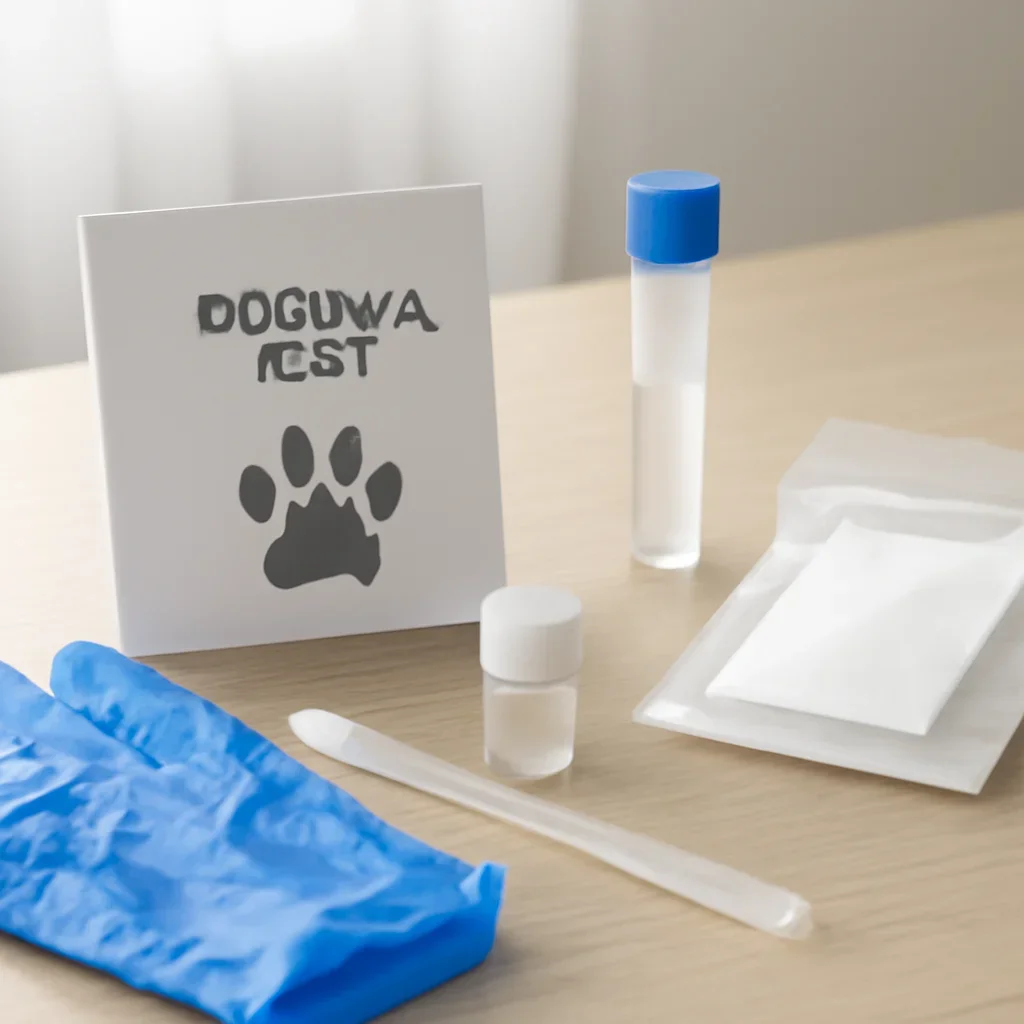
The exact technology and marker panel vary by testing program, but the basic idea is straightforward: collect DNA, analyze a defined set of genetic markers, and produce profile data that can be used for the purpose supported by that system.
Confirm whether you need genetic identity, parentage verification, breed ancestry, health screening, or another specific type of canine DNA analysis.
Many profile programs use cells collected with a cheek swab. Follow the provider's directions carefully to reduce avoidable sample problems.
The laboratory generates marker data according to its profile platform rather than automatically performing every type of canine genetic analysis.
Depending on the service, the resulting profile may be documented for identity or compared with compatible profiles for a parentage question.
For the wider testing process, see how dog DNA tests work and non-invasive sample collection.
These tests all use DNA, but they are designed to answer different questions. This distinction should be clear before you choose a kit.
Designed around genetic identity and, in appropriate programs, comparison for parentage-related questions.
Designed to estimate breed-related ancestry using the provider's reference populations and ancestry-analysis methodology.
Designed to look for specific disease-associated variants included in the selected health test or panel.
A profile becomes useful when it has a defined purpose and, where comparison is needed, the appropriate reference profiles are available.
A marker profile can provide a genetic reference associated with the sampled dog within the relevant program or record system.
Compatible profiles can be compared to evaluate whether a proposed sire or dam is genetically consistent with the offspring.
Breeders may use genetic profiling to strengthen documentation around pedigrees, planned matings, and lineage records.
Some registry programs have their own DNA-profile requirements. Always confirm the required provider, sample process, and compatible profile system before ordering.
Dogs inherit DNA from their biological parents. Parentage evaluation uses genetic markers from the offspring and compares them with compatible marker profiles from the proposed sire, dam, or both.
That distinction matters: simply having a profile for one dog does not identify its parents. Parentage requires other suitable profiles against which the dog's genetic markers can be evaluated.
“DNA test” describes the biological material being analyzed—not the question the test answers. If you want breed ancestry, choose a breed-identification test. If you want inherited-health information, choose a test that explicitly lists the relevant disease-associated variants. If you need genetic identity or parentage, choose a profile system designed for that purpose.
For many pet owners who simply want to know breed ancestry, a profile may not be the product they are looking for. Its value becomes clearer when there is an identity, breeding, lineage, or parentage objective.
Genetic profiles can help support documented breeding records and provide the marker information required for compatible parentage evaluations.
When there is a specific sire, dam, or litter question, a suitable parentage service may use compatible profiles to evaluate the proposed relationship.
A registry may require a particular DNA program for specific dogs or breeding situations. Its requirements should be checked before ordering elsewhere.
Where more than one sire could potentially be involved, parentage analysis may help determine which proposed parent is genetically compatible with each offspring.
Programs maintaining detailed lineage records may use DNA profiling as an additional layer of documentation rather than relying solely on written records.
Some owners may want a genetic identity record for a specific purpose even when breed ancestry or health screening is not the primary question.
The output of a true DNA-profile service may look less like a consumer ancestry report and more like structured genetic-marker documentation.
Learn how to read DNA resultsStarting with the intended use prevents a common mistake: buying one kind of DNA test and expecting it to answer a completely different genetic question.
Decide whether your goal is identity, parentage, breed ancestry, inherited health, or another clearly defined purpose.
Do not assume every dog DNA kit performs ancestry, parentage, and health analysis simply because all three involve DNA.
If parentage is your goal, determine which dogs need to be sampled and whether compatible reference profiles already exist.
For formal registration or breeding requirements, verify which laboratory or DNA program is accepted before collecting the sample.
Check the collection instructions, sample type, identification requirements, and whether witnessed or controlled collection is required for your intended use.
Confirm whether you receive raw marker data, a profile number, parentage evaluation, certificate, digital report, or another defined output.
Related reading: how to choose the right DNA test, are DNA tests accurate?, and how long DNA test results take.
Separate the concept of genetic identity from ancestry and health, then choose the test that matches the exact question you need answered.
In identity-focused testing, the goal is to create structured genetic-marker information associated with the sampled dog.
The profile supplies genetic information, but parentage evaluation depends on comparing the relevant dogs using compatible data.
If you want breed ancestry or inherited-health information, confirm that the test explicitly includes those analyses rather than expecting them from an identity profile.
Move directly to identity, breed ancestry, health, or general canine DNA information without treating every genetic test as interchangeable.
Straightforward answers to the questions that matter before choosing identity, parentage, breed, or health testing.
Visit all DNAOM FAQsIn the identity and parentage context, a dog DNA profile is a record of selected genetic markers from a dog's DNA. Those markers can provide genetic identity information and may be compared with compatible profiles when evaluating parentage.
No. Breed ancestry testing and genetic identity profiling have different purposes. A breed test estimates ancestry using breed-related reference data, while an identity profile records markers used for identification or compatible relationship comparisons.
An identity or parentage profile should not be interpreted as a breed-identification test. If breed ancestry is your question, choose a service specifically designed for breed analysis.
Not necessarily. Identity and parentage profiles should not be assumed to contain disease screening. Genetic health tests explicitly analyze selected disease-associated variants.
No. Parentage verification is a comparison process. A dog's profile needs to be evaluated against compatible genetic information from the proposed parent or parents using the appropriate parentage-testing system.
Many canine DNA programs use a cheek swab to collect cells from inside the dog's mouth. Follow the exact collection and identification procedures required by the laboratory or registry that will use the result.
Do not assume so. Marker technologies and databases can differ between systems. For parentage or registry use, confirm profile compatibility and acceptance before ordering.
Profiles can be particularly relevant to breeders, owners with parentage questions, registry participants, and anyone who needs genetic identity documentation for a defined purpose. Owners interested mainly in ancestry may prefer a breed DNA test instead.
If your goal is genetic identity or lineage-related documentation, start with a profile-oriented test. If you need ancestry or health information instead, choose a test specifically designed for that job.