01
Add context to an unknown history
For strays, transfers, and dogs with limited owner history, an ancestry report can provide information the rescue may not otherwise have.

A mixed-breed dog's appearance does not always tell the whole ancestry story. DNA breed identification can give U.S. shelters, foster groups, and adopters another piece of useful information—as long as the result is used to add context rather than predict an individual dog's behavior.
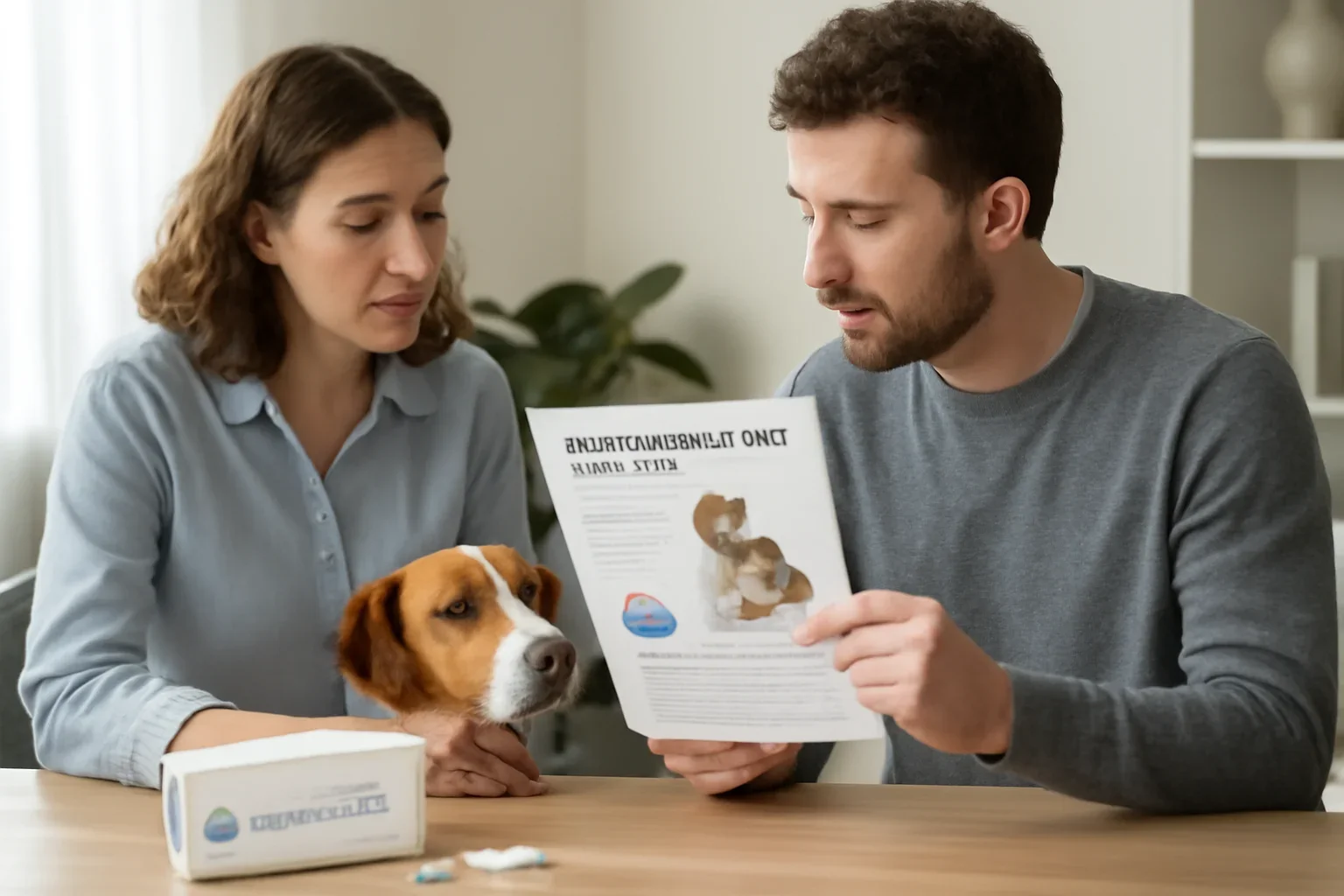
Breed identification reports can help rescues replace uncertain visual guesses with DNA-based ancestry information. That can make conversations with adopters more transparent and informative. The report works best alongside the dog's observed temperament, foster notes, medical history, size, age, and household experience—not as a shortcut for predicting personality.
Shelter dogs often have complex ancestry. Physical features can give clues, but different genetic combinations can produce dogs that look similar even when their ancestry differs. A DNA report adds another source of information when a rescue wants to understand a dog's background.
For strays, transfers, and dogs with limited owner history, an ancestry report can provide information the rescue may not otherwise have.
Staff and fosters can distinguish between what DNA suggests, what has been directly observed, and what remains unknown instead of presenting a visual breed guess as fact.
Mixed ancestry can be difficult to identify reliably from appearance, particularly when several breeds contribute to a dog's genetic background.

DNA testing does not need to become the center of a dog's adoption profile. A better approach is to use it as one structured data point alongside the information staff and fosters already collect.
Follow the testing kit's collection instructions carefully to obtain an appropriate sample for laboratory analysis.
Look at the breeds or ancestry groups reported, their estimated contributions, and any limitations explained by the provider.
Record the dog's actual behavior, handling comfort, activity level, social history, and home experience independently of the DNA result.
Present ancestry as background information while emphasizing what the rescue has directly learned about the individual dog.
Learn more about how dog DNA tests work and non-invasive sample collection.
The value of DNA ancestry comes from using it for the question it can actually answer. Breed identification provides ancestry information; it is not an all-purpose assessment of the dog.
Research involving shelter dogs in the United States highlights three reasons to handle breed information carefully: mixed ancestry is often complex, visual identification has limitations, and breed labels can influence how people perceive dogs.
Shelter dogs can carry ancestry from several breeds, making a simple one- or two-breed visual label an incomplete description of genetic heritage.
Studies comparing shelter labels with DNA results have found that identifying multiple breed contributions from appearance becomes especially difficult in mixed-breed dogs.
Breed labels—particularly labels carrying strong stereotypes—can influence how potential adopters evaluate dogs independently of the dog's observed individual qualities.
Breed ancestry can be interesting and informative, but an adoption decision is about an individual dog. Modern canine genetics research shows substantial variation in behavior within breeds, with genetics, environment, learning, socialization, age, health, and individual experience all contributing to what adopters see.
That makes the rescue's firsthand information especially valuable: how the dog responds to handling, settles in a foster home, interacts with people, responds around other animals, walks on leash, rests, plays, learns, and adapts to new situations.
A breed report becomes more useful when it sits beside practical, dog-specific information instead of dominating the listing.
Describe what staff and fosters have actually seen: confidence, affection style, playfulness, independence, curiosity, or sensitivity.
Explain activity needs based on the dog's current behavior rather than automatically assigning an exercise requirement from breed ancestry.
Foster observations about settling, sleeping, house routines, visitors, noises, and time alone can be directly relevant to adoption fit.
Share what the rescue has learned about grooming, veterinary handling, restraint, touch, equipment, and other everyday interactions.
Clearly distinguish observed interactions with adults, children, dogs, cats, or other animals from situations that have not been evaluated.
Include the report as an additional piece of background information while making clear that ancestry does not determine individual behavior.
The goal is not to create a longer breed label. It is to communicate what DNA can add while keeping the individual dog's known qualities at the center of the story.
DNA testing identified several breed ancestries in this mixed-breed dog's genetic background. We share those results as interesting background information rather than a prediction of personality.
What our foster team tells usThe information below reflects this dog's actual time in care: daily activity, interaction style, home routine, training progress, handling comfort, and any observed experiences with people or animals.
What we still do not knowSituations the dog has not experienced or been evaluated in should be identified as unknown rather than inferred from DNA ancestry.
Knowing that a dog has ancestry from a breed associated with a health condition does not establish that the dog carries a particular disease-causing variant or will develop that condition.
Breed identification and genetic health screening answer different questions. If health information is part of the goal, evaluate the actual variants included in the health test rather than inferring medical risk from ancestry alone.
Explore genetic health testing and dog disease testing for health-focused options.
Testing every dog may not be the right use of resources for every organization. A rescue can first decide when ancestry information would add enough value to justify testing.
DNA information may be more useful for a dog with little reliable history than for one whose documented ancestry is already known.
Consider whether ancestry information will genuinely help staff, fosters, or adopters understand the dog's background more clearly.
Before testing, decide how the organization will communicate mixed ancestry without turning percentages into behavioral stereotypes.
If health is the real concern, confirm whether the selected product includes relevant genetic health markers rather than ancestry alone.
Consider whether results are likely to arrive while the dog remains in care or whether the information can be shared with the adopter later.
Using the same standards for when and how results are disclosed can help avoid giving particular dogs disproportionate emphasis based on ancestry.
Compare the decision factors in how to choose the right DNA test, are DNA tests accurate?, and how long DNA test results take.
Rescues can get more value from ancestry reports when they use the information carefully and continue to describe each dog as an individual.
An ancestry report can clarify genetic background without turning the reported breeds into assumptions about how the dog will behave.
Foster experience, handling observations, health information, and daily behavior are often more immediately useful to an adopter choosing a compatible companion.
Explain what the report found, what the rescue has observed, and what is still unknown rather than filling gaps with breed-based assumptions.
Compare ancestry testing, understand how results are generated, and decide which type of testing fits the question you need answered.
Straightforward answers for shelters, foster organizations, volunteers, and adopters considering breed identification testing.
Visit all DNAOM FAQsThey can provide additional information about a dog's likely genetic ancestry, particularly when the dog's history is unknown and visual breed identification is uncertain. The result is most useful when combined with the rescue's firsthand observations.
Appearance can provide clues, but mixed-breed dogs may inherit physical features in combinations that make ancestry difficult to determine visually. DNA analysis can provide additional information about genetic ancestry.
It should not be used that way. Individual behavior is influenced by many genetic and non-genetic factors. For adoption decisions, direct observations of the dog's actual behavior and home experience should remain central.
A rescue can share ancestry as supplemental background information. It is helpful to clearly separate DNA-derived ancestry from observed behavior, medical information, foster notes, and situations that have not yet been evaluated.
Ancestry may provide context, but it should not be presented as a guarantee of exact adult size. Current age, weight, growth, body structure, ancestry, nutrition, and other factors may all be relevant when estimating mature size.
No. Ancestry and genetic health screening answer different questions. A dog having ancestry from a particular breed does not itself prove that the dog carries or will develop a breed-associated inherited condition.
Not necessarily. Each organization can consider cost, adoption timelines, the dog's existing history, the purpose of testing, and whether the result is likely to meaningfully improve communication with an adopter.
Explore dog DNA testing that can add genetic ancestry context while keeping individual observation, health history, and responsible matchmaking at the center.