01
Inherited health variants
Health testing can look for known variants associated with specific inherited conditions. The exact conditions covered depend on the laboratory and panel.

Cat DNA testing can help identify specific inherited genetic variants, but the value of a test depends on what it actually screens for. This practical guide explains the process, the difference between broad and targeted testing, and how U.S. cat owners can interpret results without expecting a DNA report to replace veterinary care.
A cat DNA test starts with a biological sample, commonly cheek cells collected with a swab. A laboratory extracts DNA and examines the genetic markers included in the selected test. The report may identify particular inherited variants, but it should be interpreted according to the condition, inheritance pattern, and your cat's veterinary history.
“Cat DNA test” is a broad label. Different tests answer different questions, so comparing the test scope matters more than choosing a product simply because it promises more data.
Health testing can look for known variants associated with specific inherited conditions. The exact conditions covered depend on the laboratory and panel.
If there is a known breed-related or family concern, a focused test may be more useful than paying for a broad panel that includes unrelated markers.
Some feline tests include trait or other genetic-marker information. These results should be kept separate from clinically meaningful disease testing.
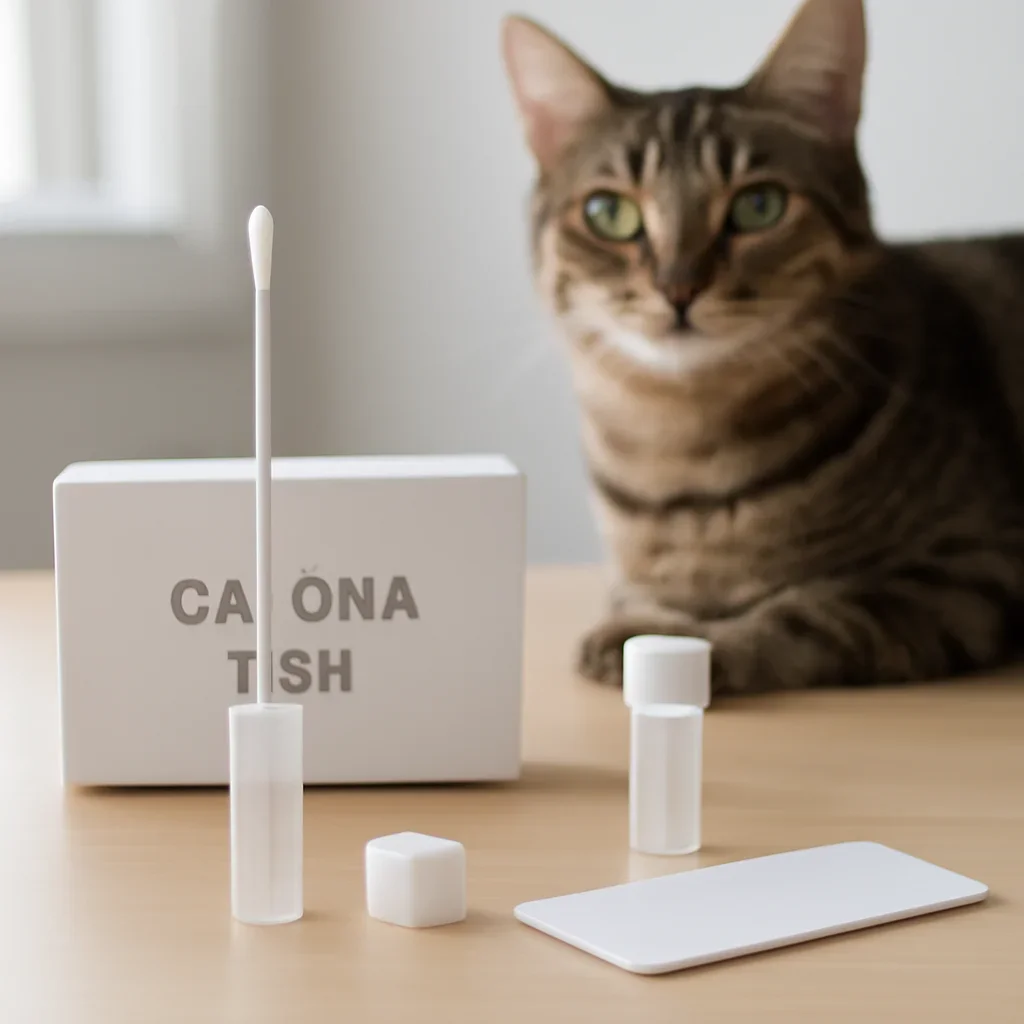
Collection instructions vary by provider, but the basic journey is straightforward: collect the required sample, submit it to the laboratory, and review a report based on the markers included in your selected test.
Decide whether you need a broader feline health screen or a targeted test for a particular inherited condition.
Follow the kit instructions exactly. Many feline DNA tests use cells collected from inside the cheek rather than a painful procedure.
The laboratory processes the sample and examines the specific genetic variants or markers included in that test.
Look at what was tested, the inheritance pattern, and the report's interpretation before deciding what the result means for your cat.
Learn more about non-invasive sample collection and how DNA test kits work.
Neither approach is automatically “better.” The useful test is the one that matches the question you are trying to answer.
A broader screen can make sense when you want to review several inherited health markers together rather than investigate one specific condition.
Targeted testing can be a better fit when there is a known condition, family history, breed-associated concern, or a specific result you need to investigate.
Genetic testing can be highly useful when the question and the tested variant are well matched. It is less useful when a report is treated as a complete picture of a cat's present or future health.
A DNA report cannot rule out every inherited condition simply because the tested markers were negative.
The meaning of a variant depends on the condition and how that variant is inherited and expressed.
Some genetic results cannot predict when signs will appear or how severely an individual cat may be affected.
Health concerns may require an exam, imaging, bloodwork, or other clinical testing beyond DNA analysis.
Feline polycystic kidney disease is a useful example because a targeted DNA test can look for the inherited PKD1 variant associated with a form of the disease.
A relevant genetic result can be important for a cat owner or breeder, especially when ancestry or family history makes PKD a concern. But the genetic result does not tell you how severe the condition will become in an individual cat.
Ignore the size of the marketing claim for a moment. A more useful comparison starts with the test's actual scope and how clearly the provider explains the result.
Look for a clear list of tested genes, variants, conditions, or markers rather than relying on a headline number.
Consider breed background, known family history, symptoms, and the reason you are testing before choosing broad or targeted screening.
Check exactly how the sample should be collected, packaged, and returned so avoidable collection problems do not delay testing.
Terms such as clear, carrier, positive, affected, and at-risk can mean different things depending on the inheritance pattern.
Timing matters, but usefulness, test relevance, sample quality, and report clarity are more important than choosing on speed alone.
For health-related findings, know whether you will need to discuss the result with your veterinarian or consider additional clinical testing.
For a broader buying framework, see how to choose the right DNA test and are DNA tests accurate.
A useful report should help you understand the tested variant and what the laboratory's finding means. Interpretation matters because inheritance patterns differ across genetic conditions.
Learn how to read DNA resultsStart with the question you need answered, then choose the smallest relevant test that answers it well.
A multi-condition feline screen can provide useful inherited-health context when you genuinely want information across several markers.
If PKD or another defined inherited condition is the real question, a condition-specific test may provide a more focused answer.
Genetic information is most useful when you understand the tested variant, its limits, and whether a veterinarian should help with the next decision.
Use these guides to compare test types, understand accuracy and turnaround, or move directly to the type of testing you need.
Short answers to the questions cat owners commonly have before ordering a genetic test.
Visit all DNAOM FAQsA DNA test analyzes genetic material from a submitted sample. With many at-home feline tests, cells are collected from inside the cheek. The laboratory then examines the genetic markers or variants included in the selected test and reports the findings.
It depends on the test. A report may include findings related to specific inherited health variants, traits, or other genetic markers. Always check the exact panel before ordering.
A genetic test can identify certain disease-associated variants, but a DNA result is not automatically the same as a clinical diagnosis. Depending on the condition, veterinary examination, imaging, bloodwork, or other testing may still be needed.
A targeted feline PKD test can identify the inherited PKD1 variant associated with a form of polycystic kidney disease. The result does not predict how severe the condition will be in an individual cat.
Not necessarily. A broader panel can be useful when you want information across several inherited markers. A targeted test can be the clearer choice when you already have one specific genetic concern.
Turnaround varies by laboratory, test type, sample quality, and whether a sample needs to be repeated. Review the stated turnaround for the exact test rather than assuming all DNA tests take the same amount of time.
If a result relates to an inherited health condition, sharing it with your veterinarian can help place the finding in the context of your cat's age, symptoms, history, and any clinical testing that may be appropriate.
Compare feline DNA testing options based on the question you need answered—not simply the number of results promised on the box.